
Introduction
Imagine this: Mrs. Sharma, a 68-year-old grandmother in South Delhi, suffered a stroke three months ago. Her family was worried about her future. She couldn’t walk properly, her arm felt weak, and climbing stairs seemed impossible. But instead of spending months commuting to a clinic in traffic, a certified physiotherapist now visits her home three times a week. Today, she’s walking with confidence, greeting her grandchildren at the door, and even helping with light household tasks.
Stories like Mrs. Sharma’s are becoming increasingly common in Delhi. More and more families are discovering that recovery doesn’t have to happen in a hospital or clinic. With physiotherapy at home in Delhi, professional care is coming directly to where patients feel most comfortable, their own homes.
In today’s busy world, managing health while juggling work, family, and responsibilities is challenging. Delhi’s traffic, pollution, and busy schedules make it difficult for patients to travel for regular physiotherapy sessions. But what if you didn’t have to? What if a qualified physiotherapist at home could help you heal, recover strength, and regain mobility in the comfort and safety of your own space?
This article explores how home physiotherapy services are transforming recovery for thousands of Delhiites, and how it might be the right choice for you or your loved one.
What is Physiotherapy at Home?
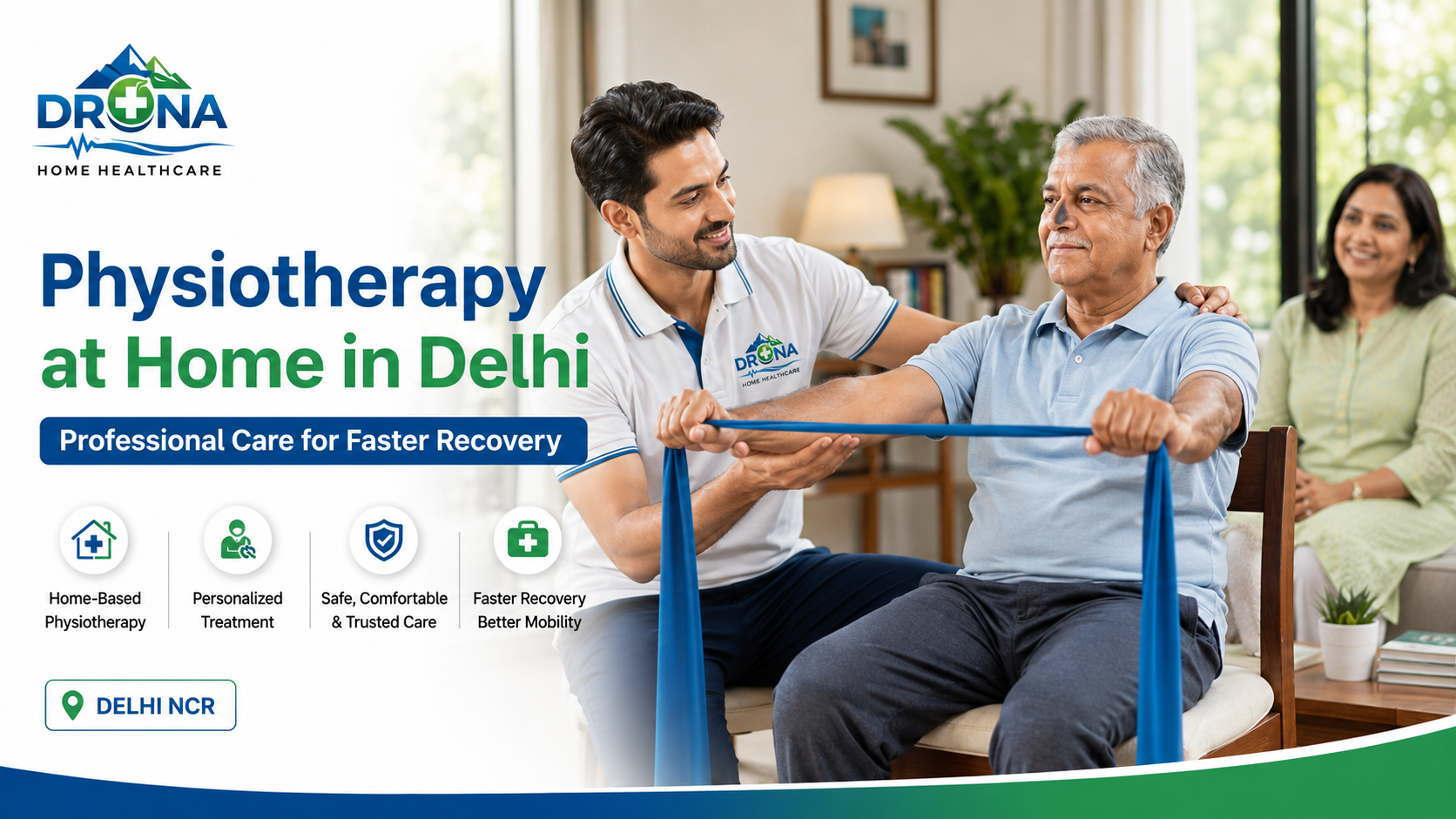
Physiotherapy at home is physical rehabilitation care delivered by a certified physiotherapist in your own residence. It’s the same professional-grade treatment you’d receive in a clinic or hospital, just without the travel, wait times, or disruption to your daily routine.
A physiotherapist who visits your home conducts a detailed assessment of your condition, designs a personalized treatment plan, and guides you through exercises and techniques tailored to your specific needs. The therapist brings equipment when needed, monitors your progress, and adjusts the plan as you improve.
Think of it as having a trusted healthcare professional who knows your home environment, understands your lifestyle, and designs recovery around your real life rather than around clinic schedules.
Benefits of Physiotherapy at Home in Delhi
1. Convenience and No Travel Stress
Let’s be honest: Delhi’s traffic is unpredictable. Commuting to a clinic, especially while recovering from surgery or managing pain, adds stress and exhaustion. Home healthcare services in Delhi eliminate this burden.
With home physiotherapy services, you save hours every week. No traffic jams, no waiting rooms, no struggling with stairs in crowded buildings. The physiotherapist comes to you, on a schedule that fits your life.
For elderly patients, busy professionals, and those with mobility challenges, this convenience is life-changing.
2. Personalized Attention and Customized Treatment
In a busy clinic, you might have 30 to 45 minutes of attention split between multiple appointments. At home, the physiotherapist focuses entirely on you.
During each session, your physiotherapist at home observes how you move, what challenges you face, and how your home environment affects your recovery. They notice if you struggle with stairs, if your favorite chair needs adjustment, or if specific movements cause problems. This personalized approach means faster progress.
The therapist can design exercises that use your home environment, your stairs for mobility training, your kitchen for daily function exercises, your favorite sitting position for flexibility work.
3. Faster and More Effective Recovery
When physical therapy at home is tailored to your life, recovery accelerates. Why? Because exercises feel relevant and immediately practical.
You’re not just doing abstract movements in a clinic. You’re learning how to climb your stairs safely, how to get up from your bed independently, how to return to gardening or cooking without pain. This real-world application means better compliance and faster functional improvement.
Research shows that patients who undergo home physiotherapy services often progress faster because the treatment directly addresses their real-life challenges.
4. Comfort, Safety, and Familiar Surroundings
Your home is where you feel safest. Walls you recognize, familiar sounds, your own bathroom nearby, these comforts matter during recovery.
Physical therapy at home reduces stress and anxiety. A relaxed patient heals better. When you’re in a familiar environment, you’re more likely to follow through with exercises, communicate openly with your therapist, and stay motivated.
For elderly patients recovering from falls or surgery, home is also safer. Your physiotherapist can identify hazards like loose carpets, poor lighting, unstable furniture, and suggest modifications that prevent future injuries.
5. Family Involvement and Support
Recovery at home naturally involves family members. Your spouse, adult children, or caregivers can observe sessions, learn techniques, and support your progress throughout the week.
This family involvement strengthens accountability, improves safety at home, and means your loved ones can help you practice exercises correctly between sessions. It transforms recovery into a family effort rather than something happening in an isolated clinic.
Who Can Benefit from Home Physiotherapy?
Senior Citizens and Elderly Care Physiotherapy
Older adults often struggle with balance, arthritis, reduced mobility, and recovery after falls. Elderly care physiotherapy at home is particularly beneficial because it’s accessible, safe, and addresses age-specific challenges like maintaining independence and preventing future falls.
Post-Surgery Rehabilitation
After knee replacement, hip surgery, or any major operation, post-surgery rehabilitation requires careful, supervised progression. Physical therapy at home ensures proper technique from the beginning, reducing complications and accelerating return to normal activities.
Stroke and Neurological Condition Recovery
Stroke rehabilitation demands consistent, intensive therapy. Home healthcare services in Delhi provide regular sessions crucial for neurological recovery. Physiotherapists skilled in stroke rehabilitation can help regain movement, balance, and independence.
Arthritis and Joint Conditions
Whether osteoarthritis, rheumatoid arthritis, or other joint problems, pain management therapy through home physiotherapy helps manage pain, improve mobility, and maintain quality of life without over-relying on medications.
Sports Injuries and Athletes
Young professionals and sports enthusiasts benefit from home physiotherapy services that allow them to continue training while recovering from injury. The therapist designs exercises that progressively return you to sport safely.
Individuals with Mobility Challenges
Those recovering from accidents, managing chronic conditions, or facing mobility limitations find physiotherapy at home in Delhi invaluable for maintaining function and preventing further decline.
Common Conditions Treated by Home Physiotherapists
Home physiotherapists in Delhi treat a wide range of conditions:
- Back and neck pain from poor posture, disc problems, or muscle strain
- Knee pain and stiffness from arthritis, injury, or surgery
- Frozen shoulder and shoulder impingement
- Post-fracture rehabilitation after bone injuries
- Parkinson’s disease and neurological conditions
- Balance and fall prevention for elderly patients
- Post-stroke rehabilitation for mobility and speech recovery
- Chronic pain management from various conditions
- Muscle weakness and deconditioning after prolonged illness
- Flexibility and mobility improvement for athletes and active individuals
Your physiotherapist assesses your specific condition and creates a treatment plan using exercises, manual therapy, and other techniques suited to your situation.
How a Home Physiotherapy Session Works
Understanding what to expect can ease any concerns about starting home physiotherapy services.
First Session (Assessment): The physiotherapist arrives, sits with you to understand your medical history, current symptoms, and goals. They perform a physical assessment by checking your range of motion, strength, balance, and functional abilities. They observe your home, noting stairs, bathroom accessibility, and safety concerns. This comprehensive assessment typically takes 45 to 60 minutes.
Subsequent Sessions (Treatment):
- The therapist begins with a brief check-in about your progress and any concerns
- Mobility support, stretching, and warm-up exercises (10 to 15 minutes)
- Targeted exercises addressing your specific condition (20 to 30 minutes)
- Manual therapy such as massage, joint mobilization, or other hands-on techniques if needed
- Education about posture, daily activities, and pain management therapy techniques
- Prescription of home exercises to practice between sessions
- Progress assessment and plan adjustments
Duration: Most sessions last 45 to 60 minutes, typically 2 to 3 times per week, though this varies based on your condition.
Frequency: Your physiotherapist recommends how often you should visit. Acute conditions might need 3 to 4 sessions weekly, while maintenance care might be weekly or bi-weekly.
Why Families in Delhi Prefer Home Physiotherapy Services
1. Saves Time and Energy: No travel means more time for work, family, and rest, all crucial for recovery.
2. Better Compliance: When therapy happens at home without travel friction, patients are more consistent with treatment.
3. Realistic Treatment: The therapist sees real challenges, your actual stairs, your kitchen layout, your daily environment, making treatment directly applicable.
4. Privacy and Dignity: Some patients prefer receiving care at home rather than in public spaces. Home healthcare services in Delhi respect this need.
5. Family Learning: Spouses and caregivers learn how to support recovery, making care more effective throughout the week.
6. Reduced Cost Over Time: Though session rates vary, the overall cost is often lower when you factor in travel time, fuel, parking, and the indirect costs of missed work or family commitments.
7. Medical Supervision in Familiar Surroundings: The therapist monitors safety in your actual living space and can identify and address hazards immediately.
Tips for Choosing the Right Physiotherapist at Home
Finding the right physiotherapist at home is important. Here’s how to make a good choice:
Check Credentials and Qualifications
Look for therapists with:
- Bachelor’s or Master’s degree in physiotherapy from recognized institutions
- Registration with relevant professional bodies
- Specialized certifications if needed for your condition, such as sports, geriatric, or neurological physiotherapy
Verify Experience with Your Condition
Ask about the therapist’s experience with your specific condition. Someone with 10 years treating stroke patients is different from someone with general experience. Ask directly: “Have you treated patients with my condition? How many? What were the outcomes?”
Check Reviews and References
Seek recommendations from your doctor, local community, or online reviews. Talk to people who’ve used the service. Word-of-mouth remains the most reliable indicator.
Assess Communication Style
During your first consultation, does the therapist listen carefully? Do they explain things in simple language? Do they seem genuinely interested in your life and goals? You’ll work closely with this person for weeks, communication matters.
Confirm Flexibility and Professionalism
Will they adjust schedules if needed? Do they maintain professional boundaries? Do they keep detailed records and communicate progress to your doctor?
Discuss Treatment Approach
Good physiotherapists don’t just give exercises. They educate you about your condition, explain why specific exercises help, and adjust treatment based on your progress.
Cost Transparency
Understand the fee structure. Are there consultation fees? What’s included in each session? What happens if you need to cancel? Clear financial communication prevents misunderstandings.
Common Concerns Addressed
Will home physiotherapy be as effective as clinic treatment?
Yes, often more so. Personalized, home-based treatment addressing your real-life challenges frequently shows better outcomes than clinic-based therapy.
What if I need special equipment?
Quality physiotherapists bring essential equipment or use items found in your home creatively. Most effective exercises require minimal equipment.
Is it safe for elderly patients?
Absolutely. In fact, it’s often safer because the therapist assesses your home environment and personalizes care to your specific abilities and limitations.
Do I need a doctor’s referral?
Not always, though some insurance plans require one. Check your insurance policy. Even without a referral, most physiotherapists work closely with your doctor.
How long until I see results?
This depends on your condition. Acute conditions show results within 2 to 4 weeks. Chronic conditions require longer, typically 6 to 8 weeks to notice significant improvement.
Conclusion
Recovery is a journey, not a destination. Whether you’re rebuilding strength after surgery, managing chronic pain, supporting an elderly parent, or returning to activities you love, physiotherapy at home in Delhi offers a personalized, convenient path to better health and independence.
This isn’t just about exercises and techniques. It’s about a trained professional who cares about your recovery, who understands your life, and who partners with you toward your specific goals.
The beauty of home physiotherapy services is that healing happens where you’re most comfortable, surrounded by loved ones, in the space you call home.
If you or your family member is struggling with pain, mobility challenges, or recovery from illness or surgery, don’t wait. Reach out to a qualified home physiotherapist today. Your health, independence, and quality of life are worth the investment.
Recovery isn’t something that happens to you. It’s something you actively pursue with the right support. Let physical therapy at home be that support.
Frequently Asked Questions
1. What are the benefits of physiotherapy at home in Delhi?
Physiotherapy at home in Delhi offers multiple advantages over clinic-based treatment. The primary benefit is convenience, no Delhi traffic or travel time. You receive personalized, one-on-one attention tailored to your specific condition and home environment. Recovery often accelerates because treatment directly addresses real-life challenges. It’s more comfortable and less stressful, leading to better compliance. Family members can observe and learn, providing support throughout your recovery. Additionally, the physiotherapist can identify and address home safety issues, making your environment safer during recovery. For busy professionals, elderly patients, or those with mobility challenges, home physiotherapy services are genuinely transformative.
2. How often should I take home physiotherapy sessions?
The frequency depends entirely on your condition, severity, and goals. Acute conditions like recent surgery or severe injury typically benefit from 3 to 4 sessions weekly initially, reducing to 2 to 3 times weekly as you improve. Chronic conditions like arthritis might require 2 sessions weekly long-term. Some maintenance programs need only weekly sessions. Your physiotherapist at home will assess your condition and recommend appropriate frequency during your first session. They’ll adjust this as you progress. Most importantly, consistency matters more than frequency, a patient doing 2 dedicated weekly sessions progresses faster than someone attending sporadically.
3. Is home physiotherapy suitable for elderly patients?
Absolutely. Elderly care physiotherapy delivered at home is particularly beneficial for seniors. It’s safer because it happens in a familiar environment where the therapist can identify fall hazards. It’s more accessible since there’s no need to navigate clinic stairs or parking. It’s less stressful for patients who might feel anxious in clinical settings. It naturally incorporates family members who can help with exercises and provide support. And it directly addresses age-specific concerns like balance, fall prevention, mobility maintenance, and independence. Many elderly patients achieve better outcomes with home-based care because treatment feels relevant to their daily lives. If an elderly parent or grandparent needs rehabilitation, home physiotherapy is often the ideal choice.
4. Can physiotherapy help after surgery?
Yes, post-surgery rehabilitation through physiotherapy is crucial for optimal recovery. After surgery, the body needs guided, progressive rehabilitation to regain strength, mobility, and function safely. Physical therapy at home ensures proper technique from the beginning, preventing complications like stiffness or weakness. Whether knee replacement, hip surgery, cardiac surgery, or any major operation, starting physiotherapy soon after surgery when your doctor approves, leads to faster, better recovery. The therapist helps you progress gradually from basic movements to functional activities. They monitor your surgical site, ensure exercises don’t strain your healing tissue, and accelerate your return to normal activities. Post-operative patients who begin early physiotherapy typically have fewer complications and better long-term outcomes.
5. How do I choose the right physiotherapist at home in Delhi?
Start by asking your doctor for referrals, they often know skilled physiotherapists in your area. Check credentials by looking for Bachelor’s or Master’s degrees in physiotherapy and professional registrations. Seek recommendations from friends, family, or local community groups. When contacting potential therapists, ask about their experience with your specific condition. During an initial consultation, assess their communication style. Do they listen, explain clearly, and show genuine interest in your goals? Verify they maintain professional standards, keep records, and communicate with your doctor. Discuss their approach. Good physiotherapists educate and personalize treatment rather than providing generic exercises. Finally, confirm transparent pricing and scheduling flexibility. Trust your instinct, you’ll spend weeks working closely with this person, so you should feel comfortable and confident in their care.